


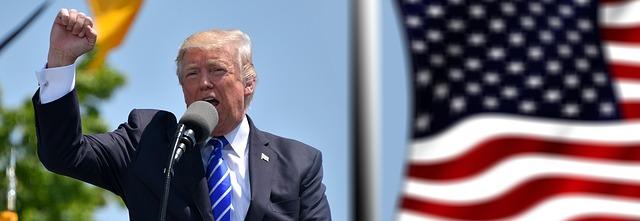
As political divisions deepen and the legacy of former President Donald Trump continues to provoke intense debate, a new question has emerged: Is it time to remove Trump from the political stage? This op-ed explores the arguments surrounding his continued influence within the Republican Party and American politics at large, weighing the potential impacts of his presence versus the consequences of sidelining one of the most polarizing figures in recent history.
The Political Climate Surrounding Trump’s Continued Influence
The enduring presence of Donald Trump within the Republican Party has reshaped American politics, creating a landscape fraught with division and uncertainty. Despite numerous controversies and legal challenges, Trump’s base remains fiercely loyal, a testament to his unparalleled ability to mobilize a significant portion of the electorate. This polarizing influence has led to a complex environment where traditional party lines blur, resulting in:
- Shifts in GOP ideology, with policies veering towards populism and nationalism.
- Heightened partisan tensions, complicating bipartisan cooperation on key issues.
- An evolving media ecosystem that amplifies echo chambers and misinformation.
As lawmakers, pundits, and citizens grapple with the question of Trump’s role in the future political landscape, the implications extend beyond mere party politics. Analyzing polling trends and congressional actions reveals a fractured system struggling to address the growing call for accountability against the backdrop of steadfast support. Consider the following data reflecting public opinion:
| Group | Support for Trump’s Continued Influence | Opposition |
|---|---|---|
| Republican Voters | 72% | 28% |
| Independent Voters | 39% | 61% |
| Democratic Voters | 15% | 85% |
Legal Challenges and Their Implications for Removal
Attempts to initiate removal proceedings are invariably met with a labyrinth of legal hurdles. Trump’s extensive legal team has historically employed aggressive defense tactics, including challenging the very jurisdiction of congressional inquiries or impeachment trials. These challenges serve not only to delay the process but also to question the constitutional grounds upon which removal actions are predicated. Moreover, the ambiguity surrounding the interpretation of “high crimes and misdemeanors” often leads to protracted debates, casting doubt on whether alleged actions meet the threshold necessary for removal.
Compounding these challenges is the politically charged environment that surrounds any move to remove a sitting president. Legislators must navigate a complex interplay of public opinion, party loyalty, and potential ramifications for future elections. The consequences of removal extend beyond immediate political fallout, potentially influencing international relations and domestic stability. Below is a summary of key legal and political obstacles that shape the trajectory of removal efforts:
| Legal Challenge | Implication |
|---|---|
| Jurisdictional disputes | Delays proceedings; questions authority of Congress |
| Definition ambiguity | Complicates consensus on impeachable offenses |
| Constitutional defenses | Mounts procedural roadblocks |
| Partisan polarization | Undermines bipartisan support necessary for removal |
| Public sentiment volatility | Influences legislative willingness |
Public Opinion and Its Role in Political Accountability
Public sentiment serves as a powerful mechanism to check and balance the stewardship of elected officials, anchoring political accountability in the collective voice of the citizenry. Polling data and social discourse offer tangible metrics that illuminate how well leaders align with their constituents’ values and expectations. When trust erodes, the ripple effect can catalyze demands for systemic change, including calls for removal, resignation, or reform. In this context, Trump’s polarizing presence has galvanized a deeply divided public, with clear ramifications for legislative cooperation and democratic integrity.
Understanding the nuances of public opinion requires dissecting key dimensions, including approval ratings, media influence, and grassroots mobilization efforts. These factors intersect to form a dynamic landscape where political consequences are enacted or deferred. The table below highlights essential components driving political accountability through public sentiment:
| Factor | Impact on Accountability | Example |
|---|---|---|
| Approval Ratings | Reflect public satisfaction and influence election outcomes | Fluctuations in Trump’s approval linked to news events |
| Media Coverage | Shapes narratives and frames public perception | Biased versus balanced reporting on Trump policies |
| Grassroots Movements | Mobilizes voter action and pressures representatives | Protests and campaigns calling for accountability |
- Public scrutiny acts as a deterrent against misgovernance and ethical lapses.
- Active citizen engagement is essential to sustained democratic health and constitutional oversight.
- Transparent communication channels enhance trust and informed debate over leadership decisions.
Pathways for Congressional and Legal Action
Congress holds several mechanisms that could be activated to address concerns about the president’s conduct. Most notably, the impeachment process serves as a constitutional check, allowing the House of Representatives to initiate charges and the Senate to determine removal. Beyond impeachment, congressional committees possess subpoena power to investigate allegations, gather evidence, and compel testimony, putting pressure on the administration through public scrutiny and legal leverage.
Legal action may also proceed through federal courts, especially when potential violations of law are involved. Key avenues include:
- Criminal Investigations: Prosecutors can pursue charges for crimes committed while in or out of office.
- Civil Litigation: Lawsuits by private parties or states seeking damages or injunctions.
- Ethics Inquiries: Oversight bodies can sanction or recommend sanctions for breaches of ethical standards.
| Action Type | Key Actors | Potential Outcome |
|---|---|---|
| Impeachment | House Judiciary Committee, Senate | Removal from Office |
| Criminal Investigation | Federal Prosecutors, FBI | Indictment, Trial |
| Civil Litigation | States, Private Citizens | Monetary Penalties, Injunctions |
| Ethics Inquiry | Office of Congressional Ethics | Reprimands, Referrals |
Final Thoughts
As the debate over Donald Trump’s role in American politics continues to intensify, the question of whether it is time to remove him remains a deeply polarizing issue. With legal challenges, political divisions, and public opinion all playing critical roles, the decision rests not only on constitutional mechanisms but also on the will of the electorate and their representatives. Moving forward, the nation faces a pivotal moment that will shape its political landscape for years to come.