







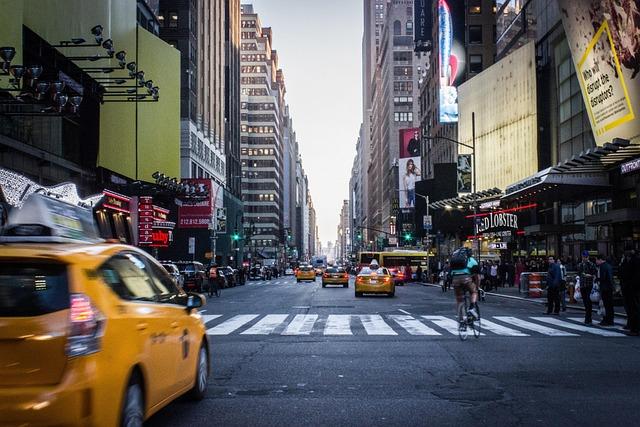
New York City’s longstanding battle against vehicle idling has generated a flood of citizen complaints, often likened to a relentless “Billy Idol” anthem of dissent echoing across the metropolis. As anti-idling enforcement intensifies and fines rack up, questions arise about the effectiveness-and sustainability-of this grassroots watchdog phenomenon. This op-ed examines the surge in anti-idling complaints, the financial implications for the city, and whether it might be time to reconsider the current approach to managing urban air quality and public nuisance reports.
The Rise of Anti-Idling Complaints and Their Impact on NYC Traffic
Complaints about vehicle idling in New York City have surged dramatically in recent years, fueled by heightened environmental awareness and aggressive citizen reporting tools. While the intention behind these complaints is clear-to reduce emissions and improve air quality-the volume and nature of the reports have created an unintended bottleneck. Traffic enforcement agencies are increasingly bogged down with minor infractions, pivoting resources away from more pressing traffic violations that directly impact congestion and safety. Critics argue this has led to a sort of ‘Billy Idol Citizen Complaint Engine’, where the zeal to shut down idling vehicles inadvertently contributes to street-level gridlock and delays.
Data from the NYC Department of Transportation illustrates this chilling paradox:
| Year | Anti-Idling Complaints | Average Traffic Delay (mins) |
|---|---|---|
| 2021 | 25,000 | 12 |
| 2022 | 37,500 | 15 |
| 2023 | 52,000 | 18 |
As these figures suggest, the rise in complaints correlates with an uptick in reported traffic delays, raising critical questions about operational priorities. Meanwhile, residents continue to navigate the fine balance between environmental advocacy and practical city living. Suggestions from transportation experts include:
- Refining complaint thresholds to focus on repeated or egregious idling violations rather than sporadic infractions.
- Deploying targeted enforcement teams to strategically manage high-impact congestion zones without overburdening the system.
- Enhancing public education campaigns about when and where idling truly poses an environmental hazard versus when it contributes more to traffic woes.
Without a recalibration of anti-idling enforcement, New York risks turning a green initiative into a congestion nightmare, whipping the city’s traffic into more knots than turbines.
Analyzing the Effectiveness of Current Enforcement Strategies
Despite the proliferation of anti-idling policies, the enforcement mechanisms currently employed in New York City reveal significant inefficiencies. The reliance on citizen complaints as the primary tool often results in inconsistent monitoring, where some neighborhoods face disproportionate scrutiny while others go under the radar. Moreover, fines collected from these reports scarcely offset the administrative costs incurred, raising questions about the fiscal sustainability of the current approach. Data from recent municipal reports show less than 15% of complaints result in confirmed violations, pointing to potential flaws in complaint verification and follow-up procedures.
- Limited patrol resources: Enforcement officers prioritize major violations, leaving anti-idling complaints frequently unattended.
- Uneven complaint distribution: High-traffic areas generate excessive reports, skewing enforcement efforts.
- Questionable complaint validity: Many reports cite acceptable circumstances, inflating complaint numbers without real infractions.
| Metric | Current Value | Ideal Target |
|---|---|---|
| Complaint-to-violation confirmation rate | 14% | 50% |
| Average enforcement response time | 48 hours | 24 hours |
| Administrative cost recovery | 30% | 75% |
Efforts to digitize complaint submissions and dispatch enforcement have improved accessibility but have not translated into meaningful reduction of idling offenses. The current system’s overreliance on the so-called “Billy Idol Citizen Complaint Engine” risks creating a noisy dataset rife with duplicates and false alarms, diverting crucial resources from systemic issues. Experts argue for a strategic pivot toward technology-driven solutions such as automated sensors and enhanced vehicle tracking, which promise more reliable data and equitable enforcement. Without recalibrating enforcement strategies to balance fairness and efficiency, the city risks perpetuating a cycle of disillusionment that undermines anti-idling goals.
Balancing Public Health Concerns with Urban Mobility Needs
Cities like New York continue to wrestle with a paradox: how to maintain air quality and public health without crippling the essential flow of urban life. Vehicle idling has long been targeted as a major contributor to harmful emissions, especially in densely populated neighborhoods with vulnerable communities. Yet, the blanket push to curb idling often overlooks the nuanced realities on the ground. Delivery drivers, ride-share vehicles, and public transportation all depend on periodic stops in high-traffic areas-sometimes requiring engines to stay on to meet tight schedules or ensure safety standards.
Any policy addressing this challenge must weigh the following factors:
- Public Health Benefits: Reducing emissions can lower the incidence of asthma, respiratory diseases, and cardiovascular problems.
- Operational Feasibility: The practical needs of drivers and transit operators who rely on idling for heat, cooling, or timely services.
- Technological Alternatives: The deployment of cleaner, hybrid, or electric vehicles to reduce dependency on idling.
- Community Engagement: Ensuring that resident complaints reflect broader health concerns rather than isolated nuisances.
| Stakeholder | Primary Concern | Suggested Approach |
|---|---|---|
| Residents | Air Quality & Noise | Limit idling near schools and hospitals |
| Delivery Operators | Operational Efficiency | Designate specific loading zones with idle-free time limits |
| City Officials | Policy Enforcement | Implement balanced regulations with clear exceptions |
Rethinking the Citizen Complaint System for Sustainable Solutions
New York City’s citizen complaint system, especially concerning noise and anti-idling regulations, has long been a double-edged sword. While it empowers residents to hold polluters and rule-breakers accountable, it also generates a relentless “mony mony” of grievances that often clog administrative channels without producing tangible change. The system’s emphasis on voluminous complaints, rather than effective resolution, inadvertently fosters bureaucratic fatigue and public disillusionment. Instead of addressing root causes, the current approach risks perpetuating a noisy backlash loop characterized by frustration and repetitive reporting.
For a truly sustainable solution, the city must pivot towards strategies that emphasize proactive mitigation over reactive reporting. This includes:
- Enhanced real-time monitoring: Deploying smart sensors to detect idling and noise violations autonomously.
- Community engagement programs: Educating both residents and motorists about environmental and health impacts.
- Streamlined reporting channels: Prioritizing complaints based on severity and recurrence to allocate enforcement resources efficiently.
Without recalibrating the system, the “Billy Idol Citizen Complaint Engine” will continue spinning at full throttle but deliver diminishing returns-adding noise to the noise rather than silencing it.
Concluding Remarks
As New York City continues to grapple with the challenges of air pollution and noise complaints, the persistent focus on anti-idling regulations underscores the complexity of balancing environmental priorities with urban life. While the city has invested heavily in monitoring and enforcement, questions remain about the effectiveness and efficiency of these efforts. Perhaps it is time for policymakers to reconsider the current approach and explore innovative solutions that address the root causes of citizen grievances without fueling what some critics call the “Billy Idol Citizen Complaint Engine.” Only through thoughtful dialogue and adaptive strategies can NYC hope to create a cleaner, quieter, and more livable environment for all residents.